
The size of India's middle class will nearly double to 61 per cent of its total population by 2047, from 31 per cent in 2020-21, as continuing political stability and economic reforms with a sustained annual growth rate of between 6 per cent and 7 per cent over the next two and half decades will make the country one of the largest markets in the world. The findings are part of a report released on Wednesday by the People Research on India's Consumer Economy (PRICE) and India's Citizen Environment, a not-for-profit think tank. The report titled, The Rise of India's Middle Class, is based on an analysis of primary data collected by PRICE through its pan-Indian survey.

Finance Minister Nirmala Sitharaman on Tuesday met top officials of the finance and corporate affairs ministries to review the implementation of various announcements of the Union Budget FY24. "The finance minister underlined the importance of continuous assessment of progress to ensure that various announcements are implemented in a time-bound manner," the finance ministry said in a tweet. Sitharaman also discussed in detail various issues on the digital competition laws with Rajeev Chandrashekhar, the minister of state for entrepreneurship, skill development, electronics and technology.

'Global coordination, convergence, market complexities and dynamics and cross-border enforcement compound the existing challenges we face.'

Larger firms feel that the smaller players have muddied the waters for the IBC process, leading to excessive regulation of resolution Professionals.
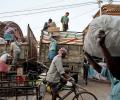
India, along with Southeast Asian countries such as Indonesia, is expected to sustain growth in the medium-term in Asia region, replacing China as the key growth driver, Morgan Stanley and Nomura said in two separate reports released on Monday. While Morgan Stanley projected a 6.2 per cent gross domestic product (GDP) growth forecast for India in FY24, Nomura estimated the Indian economy to grow at 5.9 per cent in 2023. "Even with a slowing China, we expect GDP growth in Asia to sustainably outperform other emerging markets and the US. India and Southeast Asia are set to be the fastest-growing economies this decade.

The investor education and protection fund authority (IEPFA) has reached out to top hundred companies to reduce the documentation required for individuals trying to claim their shares, according to a senior government official. Recently, the Supreme Court-appointed expert panel on the Adani-Hindenburg case had raised issues such as capacity constraints faced by IEPFA in clearing these claims which are over Rs 5,000 crore. "Our immediate priority is to ensure that claims of those investors whose application was approved a year ago but the transfer has not gone through yet are settled first.

India's urban unemployment rate declined in Q4FY23 to 6.8 per cent - the lowest in over four years -- after it stagnated at 7.2 per cent in the previous October-December quarter, reflecting improvement in the labour market, according to the Periodic Labour Force Survey (PLFS) released by the National Statistical Office (NSO) on Monday. The unemployment rate in current weekly status (CWS) terms for all ages in the March quarter was the lowest recorded in more than four years, from the time the NSO released India's first quarterly urban jobless rate for the December quarter in 2018. The jobless rate in urban areas had been on a continuous decline since the peak of 20.8 per cent in the April-June quarter of FY21.
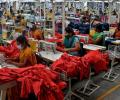
The share of women workers in registered factories submitting annual returns - working more than the statutorily-mandated maximum limit of 48 hours in a week - increased to a 11-year high of 33.6 per cent in 2019, shows the latest annual data released by the labour bureau. In comparison, only 27.9 per cent male workers worked more than the statutorily-mandated hours. Earlier in 2008, 39.2 per cent women workers had worked more than the prescribed work time.

Both Jet Airways and Go First have met with a similar fate of landing up in insolvency, albeit for different reasons. Whether Go First will be able to avoid the sharp erosion in value like in the case of Jet, experts say, will depend on how quickly it is able to restart operations and retain its slots at airports. Go First, owned by the Wadia group, filed for voluntary corporate insolvency resolution on May 2 due to inadequate capacity utilisation that led to a cash crunch.

'In real estate project insolvency, no one size can fit all.'

The Appointments Committee of Cabinet has named Ravneet Kaur, a Punjab cadre IAS officer of 1988 batch, as chairperson of the Competition Commission of India (CCI). Kaur will hold the post for five years or until attaining the age of 65. She is the second woman to serve in an 'economic regulator' role after Madhabi Puri Buch, who was appointed chairperson of the Securities and Exchange Board of India last year and the first woman to head the country's chief national competition regulator.
In what could result in a complete overhaul of the Insolvency and Bankruptcy Code (IBC), the insolvency regulator has sought public comments on the regulations it notified under the code to date. The Insolvency and Bankruptcy Board of India (IBBI) has given a window of eight months ending December 31 to all stakeholders to share their views on its regulations. IBBI has called the exercise "crowdsourcing of ideas".

The government is planning to draft rules for the National Company Law Tribunal (NCLT) to deal with Insolvency and Bankruptcy (IBC) cases, according to official sources. The Ministry of Corporate Affairs (MCA) is also looking to fill all vacant posts at various NCLT Benches by August and put in place an IT-enabled system that would use artificial intelligence (AI) for case management. The NCLT, adjudicating authority for matters related to company affairs, was constituted before the IBC came into effect.

The churn in Indian labour markets will be led by technology-driven sectors like artificial intelligence and machine learning (38 per cent), followed by data analysts and scientists (33 per cent) and data entry clerks (32 per cent).

Only one in four workers in Karnataka receive a salary, the lowest among the four industrialised states of India, a Business Standard analysis of the latest annual Periodic Labour Force Survey (PLFS) data shows. While 31.6 per cent workers in Gujarat receive regular wages (or salaries), followed by Tamil Nadu (30.3 per cent) and Maharashtra (29.4 per cent), only 25.7 per cent workers in Karnataka receive the same. The figure stands at 21.5 per cent at the national level, according to the 2021-22 PLFS data.

A key feature of the new version is to identify the people transacting on its portal by linking each user ID with the person's permanent account number (PAN), followed by a two-factor authentication through mobiles and email IDs. Those who cannot complete the KYC requirements cannot use the portal.

'Who are the people who are dying?' 'What is their profile?' 'We need to know these things.' 'We do not take health issues seriously.'

If you have seen Zwigato, Param Kumar's story will sound familiar. Laid off from his job as a repairman at a Gurugram-based water purifier provider, he now delivers groceries and food for a mobile-based delivery app, in Delhi. Kumar, who started making deliveries last August, told Business Standard that he is working longer hours than his older salaried job as an RO repairman, and has no paid leaves or health insurance. Kumar is part of India's estimated 7.7 million-strong force of gig workers.

According to Rajeev Jayadevan, co-chairman, national Indian Medical Association Covid Task Force, the current scenario qualifies as a wave.

'The fortunate part is that the severity is less. New strains are continuously forming and the virus is getting less severe.'
 © 2026 Rediff.com - Investor Information - Advertise with us - Disclaimer - Privacy Policy - Sitemap - Feedback - About us - Terms of use - Grievances